
RARE SAKURA ISHI – JAPAN
EXPERT VERIFIED
- Expert Verified Gemstone
- Fast Handling & Shipping
- Secure Vault Packaging
$ 30
Offer amount Feild


Smart Collector Choice


Pay with Crypto & Get 10% Automatic Discount

Availability: 10 in stock

- Freakingcats Gemstone Database
Sakura Ishi (Cherry Blossom Stone)
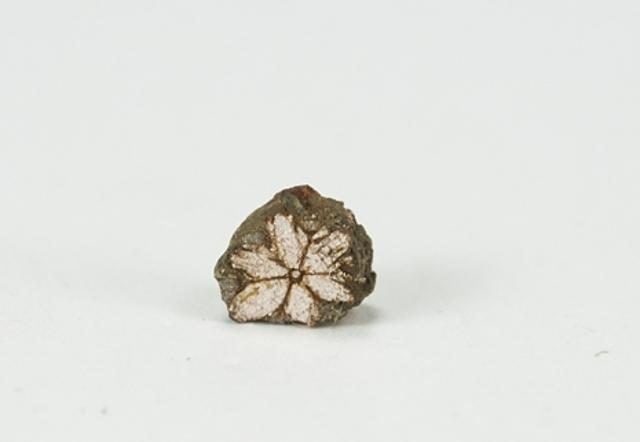
Sakura Ishi is a gemstone that captures the very soul of Japanese aesthetic and natural wonder. Known as the “Cherry Blossom Stone,” it is a mineralogical marvel I first encountered through the wisdom of an elderly collector at the Tokyo Gemstone Fair. He shared with me that finding these rare natural gems in the Japanese wilds was his life’s passion. When he opened his bag to reveal these uncut treasures, I was struck by how perfectly they resembled the Sakura—the fleeting, precious cherry flowers. These are not merely stones; they are pseudomorphs where the Earth has replaced one life with another, preserving a floral geometry in mineral form. To hold the rarest of the rare—a pink Sakura Ishi—is to hold a piece of Japan’s national heritage.
The Heritage & Discovery
Historical Significance: Sakura Ishi holds a sacred place in Japanese culture, often regarded as a “national treasure” due to its rarity and symbolic resonance. Historically, these stones were found in the riverbeds and mountains of central Japan, where they were revered as natural talismans. In the world of fine minerals, they represent one of the most famous examples of pseudomorphism—a process where the original minerals (Cordierite and Indialite) are replaced by soft Mica (Muscovite) while perfectly retaining the original six-rayed star shape. They stand as a symbol of renewal and the delicate beauty of nature, bridging the gap between rigid mineralogy and the fluid artistry of the natural world.
Discovery: My own discovery of these stones was deeply personal, born from a long conversation with that seasoned Japanese gentleman. He explained that these stones are found in hornfels—rocks that have been “baked” by volcanic heat. As the original crystals cooled and weathered over eons, they transformed into the soft, micaceous “flowers” we see today. While the common varieties are creamy white or grey, the pink Sakura stone is the ultimate rarity, possessing a delicate blush that mirrors the exact hue of a spring blossom. It is a discovery that requires both a keen eye and a deep respect for the hidden treasures of the Japanese landscape.
Important Mines: The legendary and primary source for these stones is Kameoka in Kyoto Prefecture, Japan. Specifically, the area around the Yunohana Onsen is world-renowned for producing the finest specimens. Because these stones are protected and the sites are limited, obtaining genuine, high-quality “flowers” is an exercise in patience and networking. For the vault, I prioritize specimens that have been gently weathered out of their host matrix, revealing the full, six-sided “blossom” in its natural, uncut state.
Mineralogical Profile
Description: Sakura Ishi is a pseudomorph of Mica (Muscovite/Illite) after Cordierite-Indialite. It sits at a 1 to 2.5 on the Mohs scale, as the replacement mineral is a soft, fine-grained mica. This makes them exceptionally delicate; they are stones to be cherished and viewed, rather than worn. They are characterized by a dull to waxy luster and their iconic floral patterns.
One of its most identifying traits is its hexagonal symmetry. The original Cordierite crystals formed as six-sided prisms; when they underwent “pinitization” (the transformation into mica), the internal structure was preserved as six distinct “petals” radiating from a central point. It is completely opaque, with colors ranging from earthy tans to the coveted, ethereal pink. When I select a Sakura Ishi for the collection, I look for “perfect petals” and a clear, symmetrical center. These “flowers of stone” offer a poetic depth that is unique in the mineral kingdom—a literal blooming of the Earth’s crust.
Chemical Formula: KAl2(AlSi3O10)(OH)2 (as Muscovite/Pinite)


