
SKU: OPAL0142
2.55 ct OPAL UV – BRAZIL
EXPERT VERIFIED
- Expert Verified Gemstone
- Fast Handling & Shipping
- Secure Vault Packaging
$ 120
Offer amount Feild


Smart Collector Choice


Pay with Crypto & Get 10% Automatic Discount

Availability: 1 in stock
Gemstone Details
Gem Variety:
Opal UV
Origin:
Brazil
Carat Weight:
2.55
Length (mm):
11.10
Width (mm):
11.10
Depth (mm):
5.90
Shape:
Trillion
Color
Bi-Color/Multicolor
Treatment:
No Treatment
Certificate:
On Request
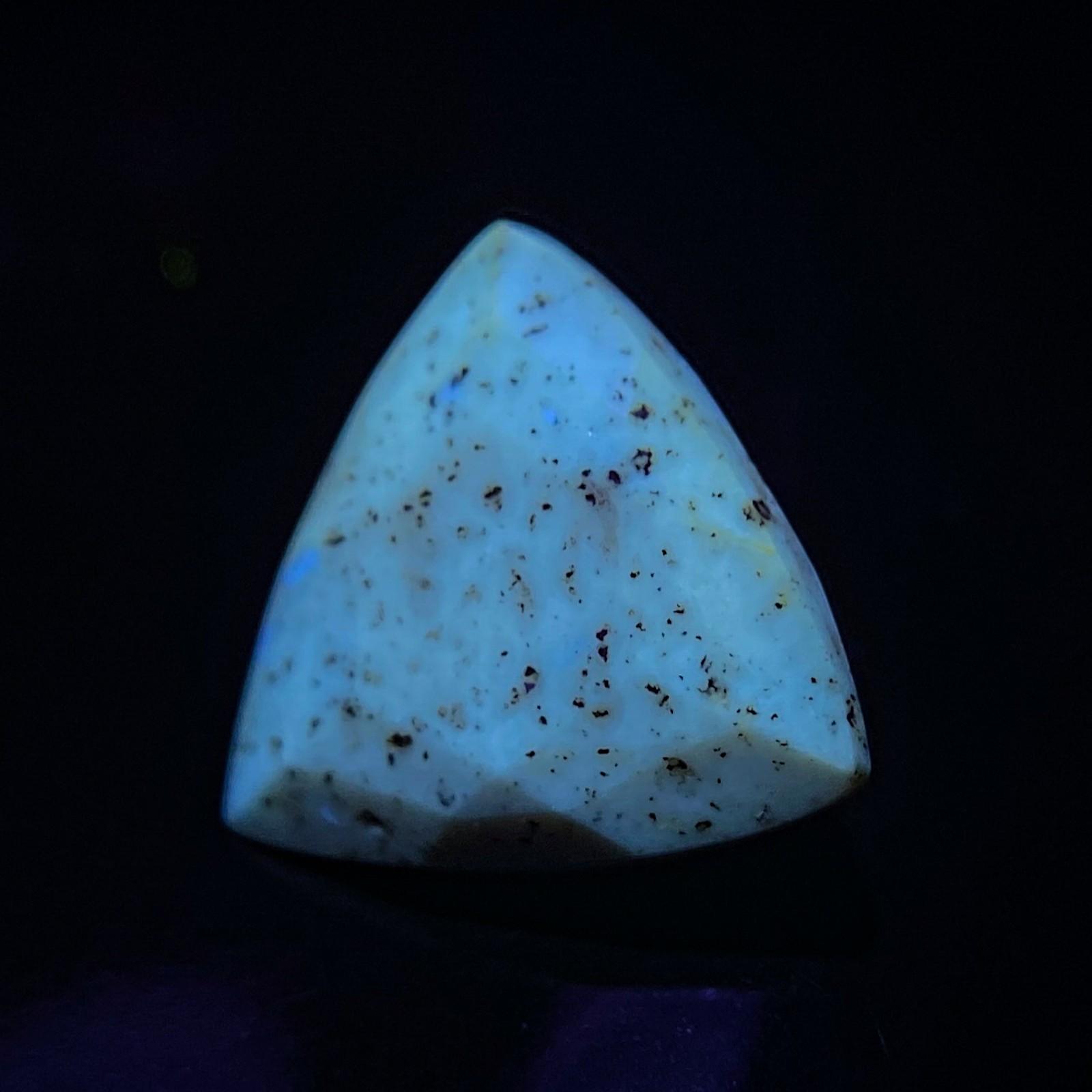
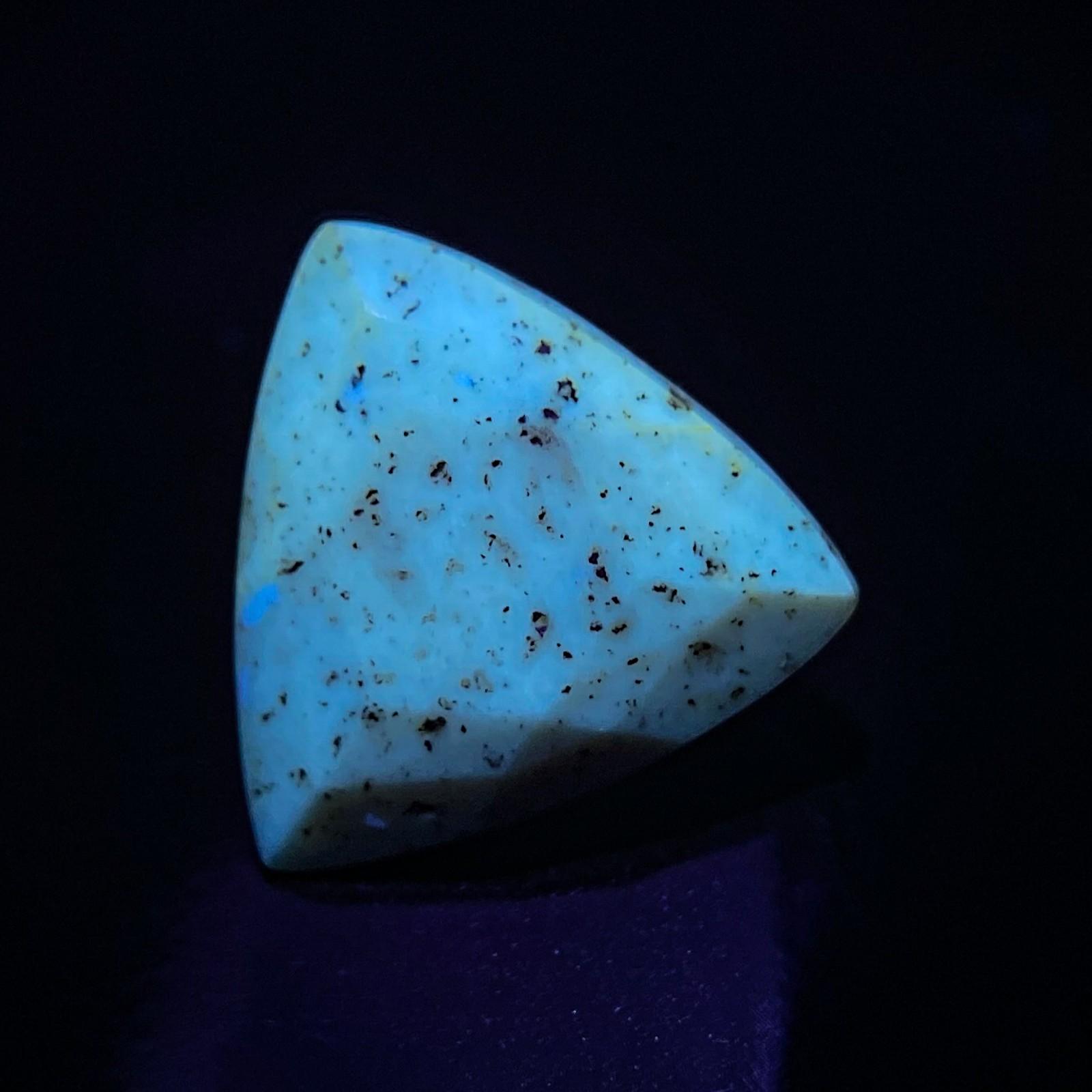
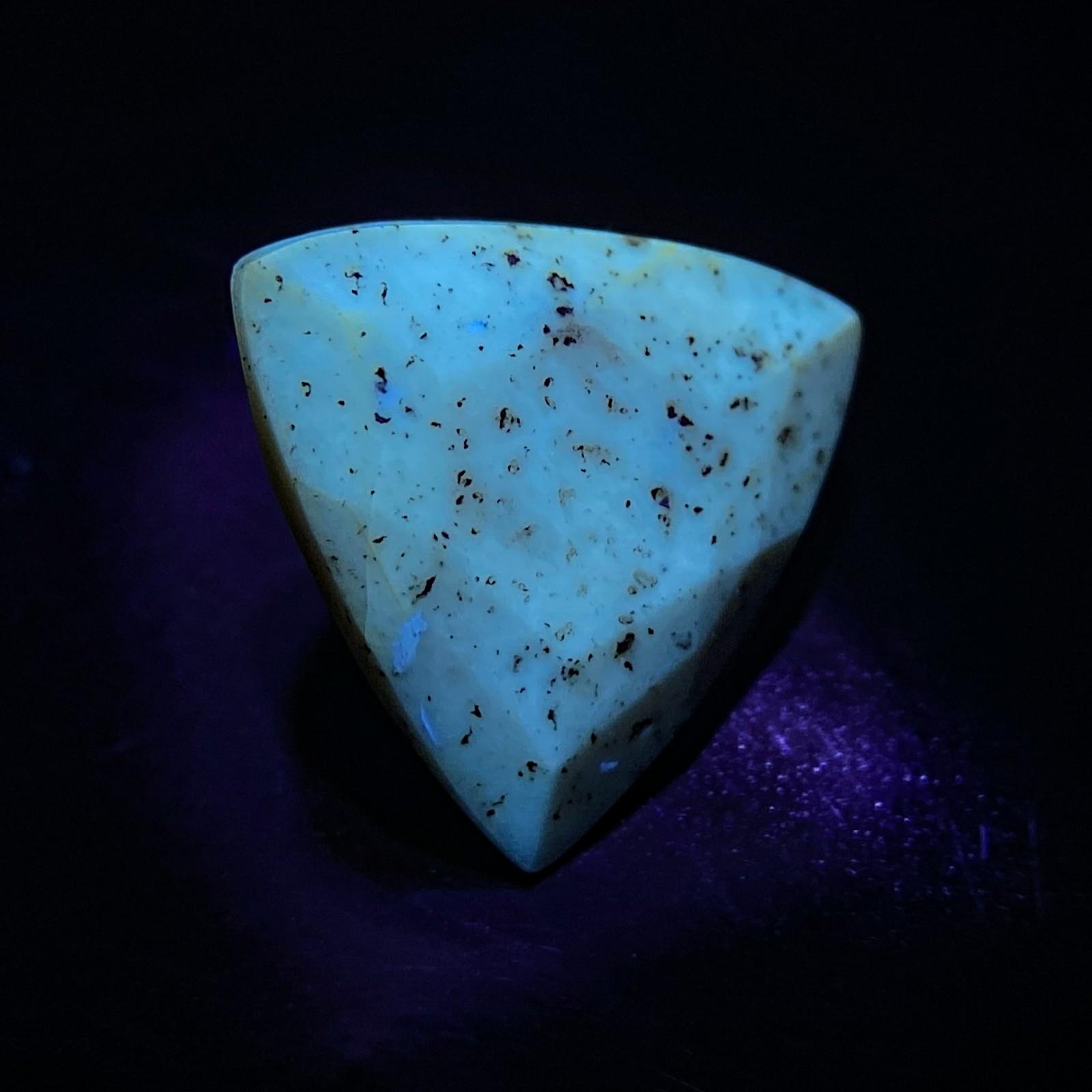
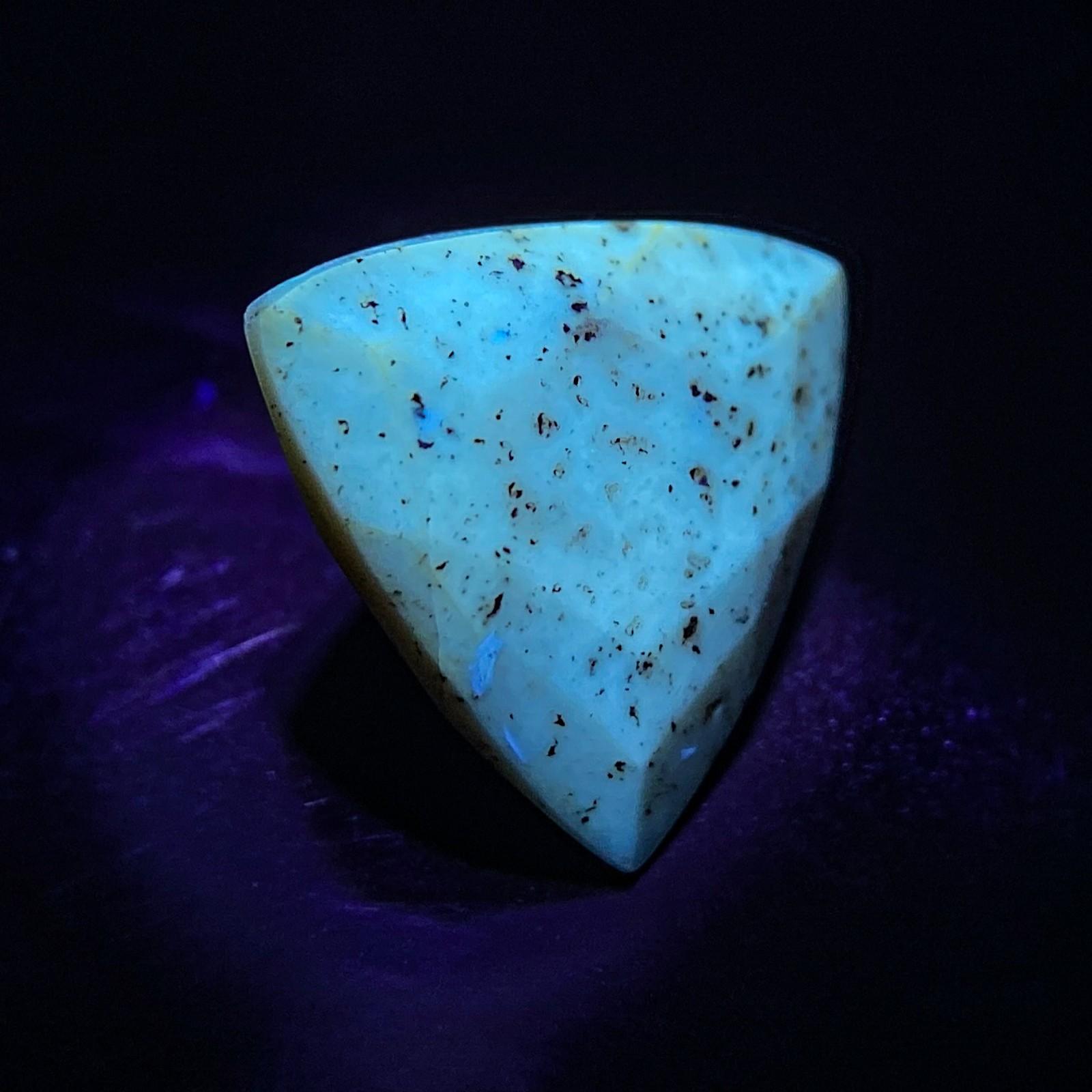
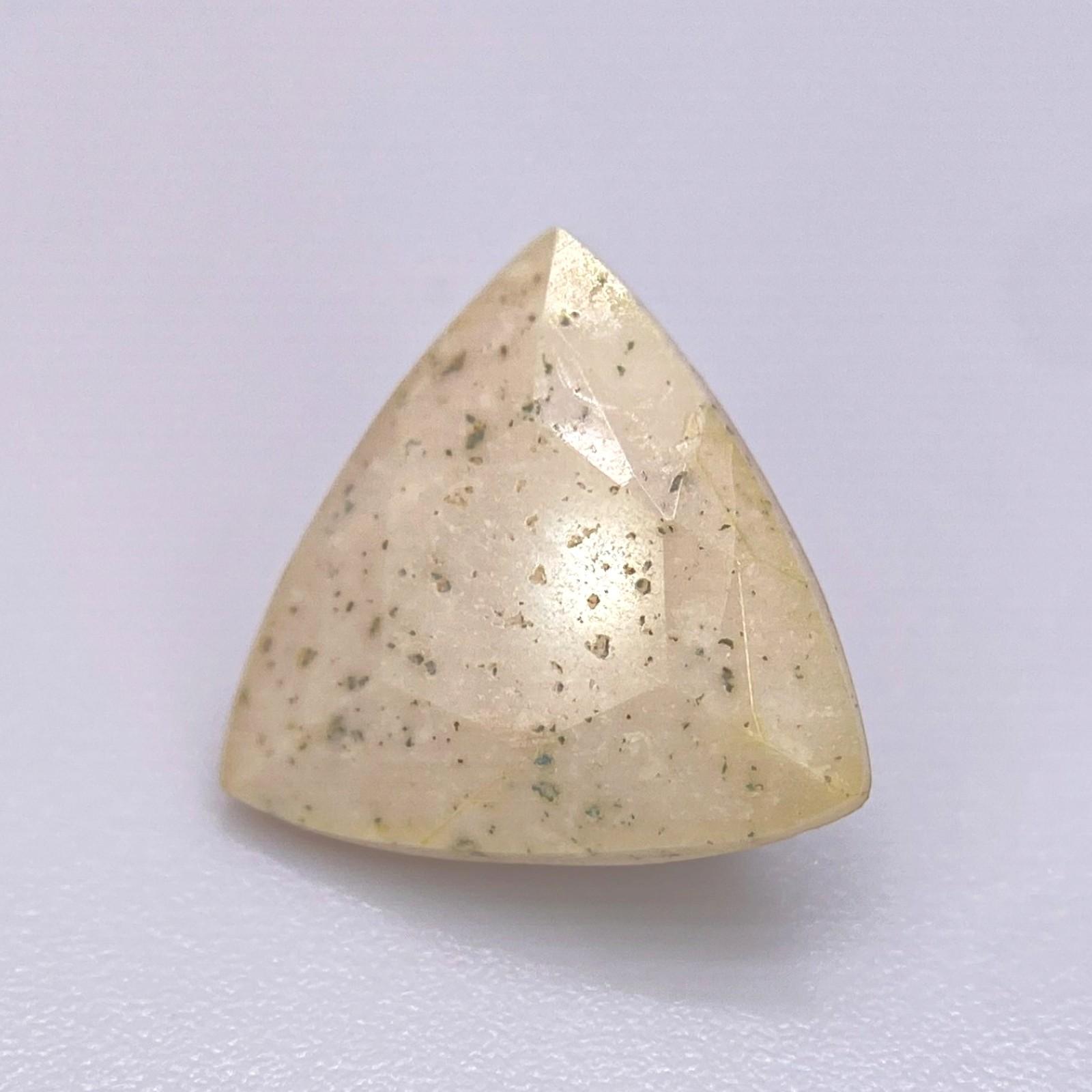
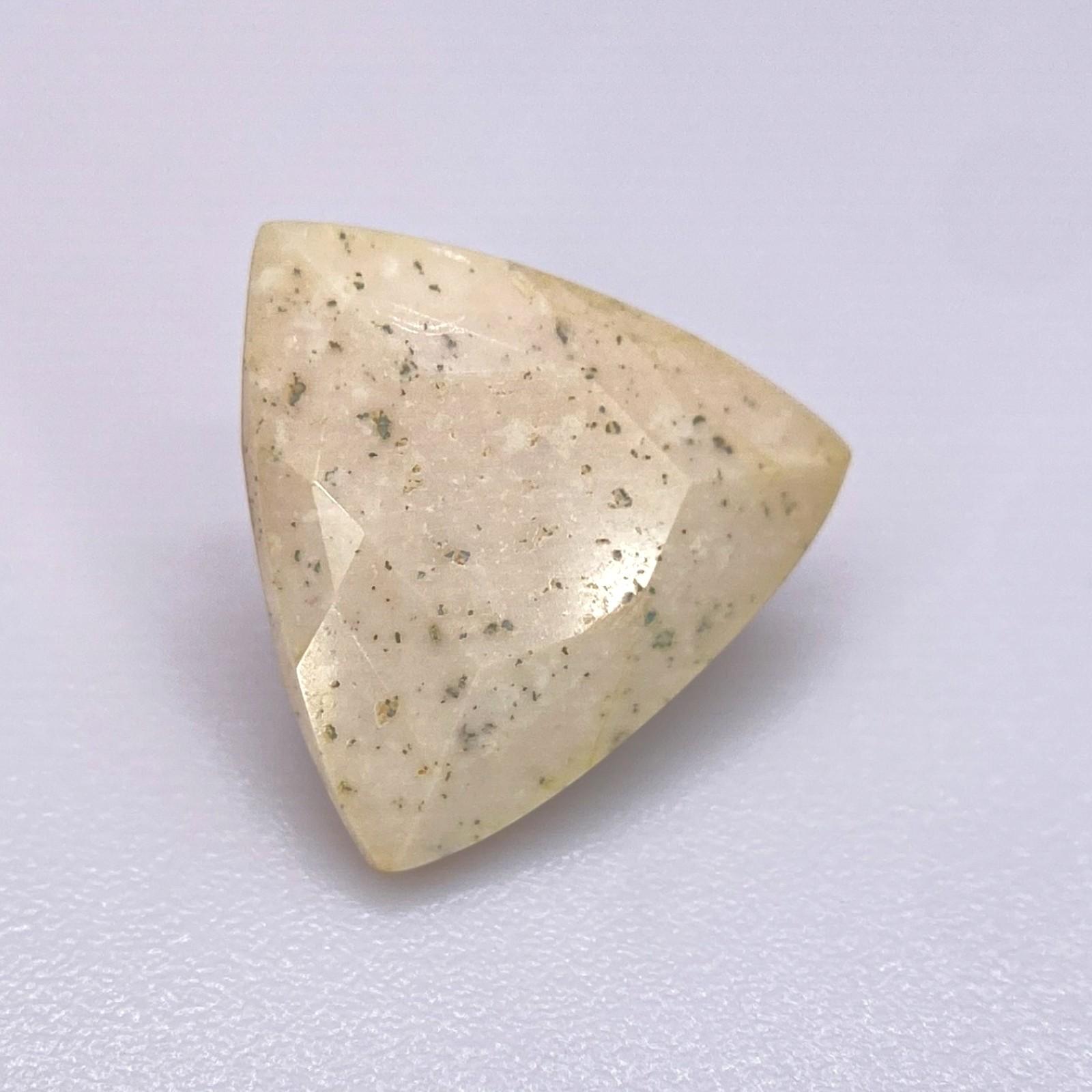
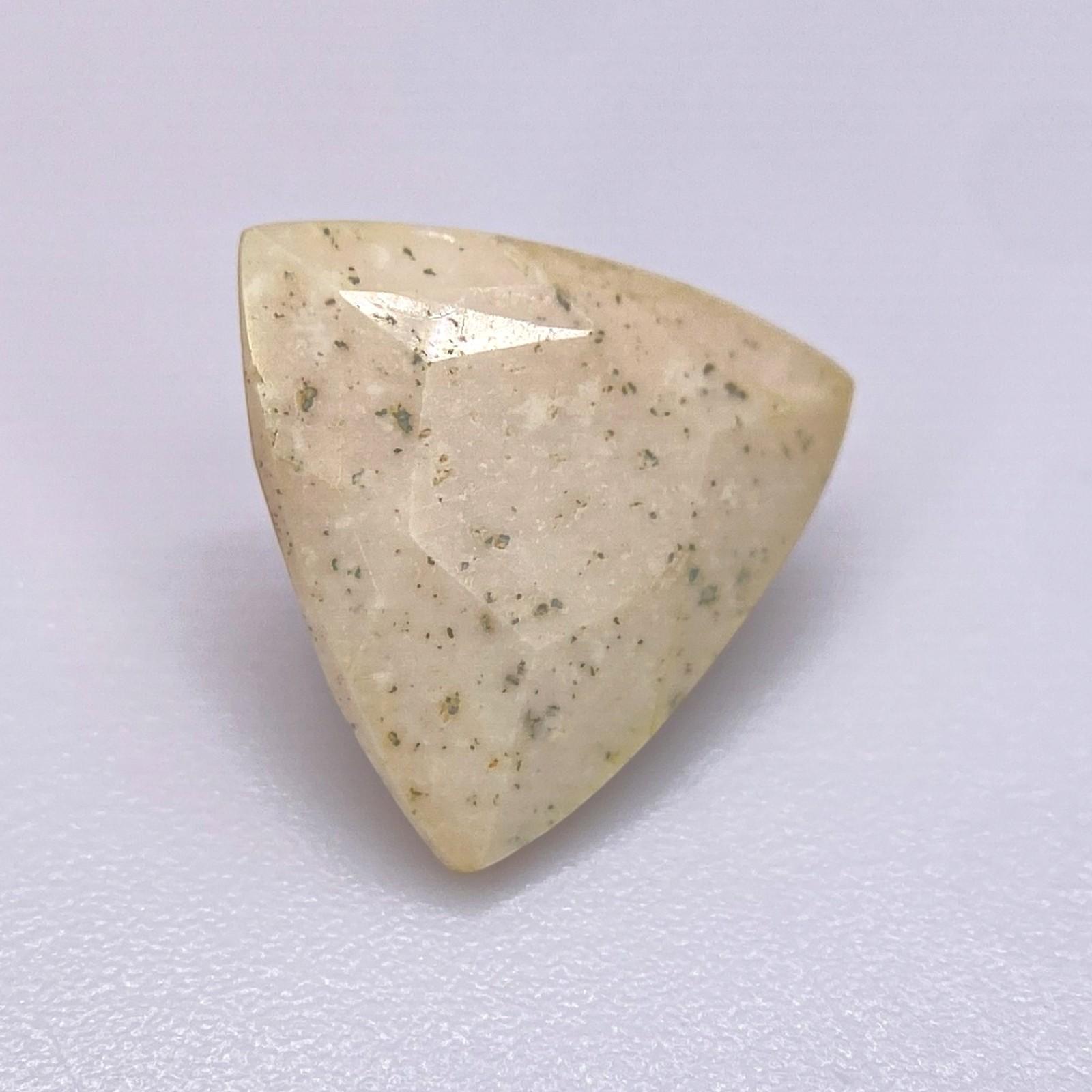


- Freakingcats Gemstone Database
Opal (Brazil) – UV Fluorescence
Precious and common Opal from the Mesozoic sedimentary basins and volcanic contact horizons of northeastern and southern Brazil—most celebrated from the legendary Pedro II mining district in Piauí—represents an extraordinary, structurally refined expression of hydrous silica mineralization, distinguished both by its spectral daylight fire and its dynamic ultraviolet luminescence. An amorphous to poorly crystalline hydrous silicon dioxide (primarily Opal-AG to Opal-CT), it is a mineraloid I have always respected for its “liquid-crystal” body clarity, delicate pinfire-to-broadflash play-of-color, and its status as a masterclass in slow colloidal silica sedimentation. For the specialist, a fine Brazilian Opal—whether presenting as a water-clear jelly nodule, a high-translucency white crystal cabochon, or an in-situ sandstone seam specimen—is a prized trophy of ancient weathering and silica-rich groundwater circulation; it offers a bright vitreous to waxy surface luster and an ethereal, luminous presence that makes it an indispensable asset for the systematic vault. As an artist, I find the nocturnal transformation under ultraviolet excitation—when an unassuming milky or water-clear body suddenly ignites into a glowing, electric neon-green, pastel yellow-green, or soft creamy white—to be one of nature’s most sophisticated and visually captivating light performances.
The Heritage & Discovery
Historical Significance
Brazilian opal is an indispensable index material for decoding the paleoclimatic weathering cycles, low-temperature groundwater drainage vectors, and silica gel settling rates within continental sedimentary basins. Historically, while Australia established the global commercial standard for sedimentary precious opal in the late 19th and early 20th centuries, the discovery of world-class deposits in the arid interior of northeastern Brazil in the mid-20th century provided the gemological and mineralogical community with an exceptional alternative. Brazilian material is celebrated internationally for its superior structural stability, low internal water content (making it far less prone to crazing than many volcanic opals), and high transparency, standing as an enduring symbol of South American gem wealth.
Discovery
The unearthing of macro-seam precious and common opal across northeastern Brazil occurred in the late 1940s and early 1950s near the town of Pedro II in Piauí. Scientifically, Brazilian precious opal is primarily Opal-AG, consisting of an ordered, three-dimensional array of uniform sub-microscopic amorphous silica spheres that diffract visible light into spectral colors. In common and hyaline varieties, silica network arrangements (Opal-CT or Opal-AN) dominate without diffraction. The ultraviolet luminescence observed in these stones is predominantly governed by trace-element activators sequestered during colloidal deposition: trace concentrations of the uranyl ion ((UO2)2+) or rare-earth elements, combined with lattice defects within the hydrated silica mesh, induce strong fluorescence. Under short-wave ultraviolet light (254 nm) and long-wave UV (365 nm), Brazilian opals frequently flash a vivid, uniform electric lime-green, yellow-green, or bright milky white, often accompanied by distinct green phosphorescence. My own respect for this material grew from analyzing this optical balance; specifically, observing an optically pure, water-clear crystal opal display spectral daylight fire while simultaneously erupting into neon-green luminescence under targeted UV lamps demonstrates a chemical duality that is deeply satisfying to the trained eye.
Important Mines
The undisputed international capital for collector-grade precious and fluorescent opal within Brazil is the Pedro II mining district, situated in the north of Piauí State. Iconic workings across this sandstone belt include the legendary Boi Morto, Roça, Piracuruca, and Olho d’Água mines, where opals occur as horizontal seams, lenses, and nodular fillings nestled within the altered Devonian sandstones of the Cabeças Formation near contact with diabase sills. Additionally, notable occurrences of fluorescent common opal, hyalite crusts, and banded agate-opal nodules have been documented in the volcanic geodes of the Paraná Basin in Rio Grande do Sul and pegmatitic alteration zones in Bahia and Minas Gerais. For the systematic vault, I prioritize specimens that exhibit high body translucency, verified physical stability free from craze lines, vivid daylight play-of-color, and an immediate, saturated green-to-yellow fluorescent glow across short-wave and long-wave ultraviolet spectra.
Mineralogical Profile
Description
Brazilian Opal is a hydrated amorphous silicon dioxide mineraloid belonging to the opal group, occurring primarily as Opal-AG in precious varieties and Opal-CT/AN in common or hyaline crusts. It sits at a moderate 5.5 to 6.5 on the Mohs scale, meaning its smooth, glassy surfaces possess fair structural durability, though its lack of cleavage and brittle conchoidal fracture require careful archival handling to protect its polished faces, cabochon domes, and natural seam margins from physical shock, mechanical abrasion, or sudden extreme temperature fluctuations. It is characterized by its bright vitreous to sub-resinous surface luster and an elegant daylight body color palette dominated by water-clear, milky white, soft honey-yellow, pale bluish-gray, and crystal-translucent, accented internally by dynamic red, green, violet, and orange play-of-color flashes.
One of its most identifying traits is its non-crystalline, seam-filling or nodular habit, routinely forming flat veinlets, rounded botryoidal pods, or pseudomorphic replacements after organic or mineral structures. It possesses a relatively low refractive index running from approximately 1.420 to 1.460, giving it a soft, liquid-like optical transmission, and a light average specific gravity ranging between 1.98 and 2.20 that directly reflects its internal bound water content (typically between 4% and 8% bound H2O in Brazilian material). Because it forms through the percolation of silica-rich groundwaters through fractured sediments and altered igneous rocks, it is commonly found in close association with Quartz, Chalcedony, Kaolinite, Sandstone, Goethite, Hematite, and Diabase. When I select an example for documentation, I look for clean internal optical transparency, well-dispersed daylight play-of-color, and a vivid, uniform electric-green fluorescent flare under ultraviolet excitation, as these emphasize the sophisticated, trace-activated chemistry of the mineraloid’s subterranean birth.
Chemical Formula
SiO2 · nH2O (Hydrated Silicon Dioxide with trace (UO2)2+ uranyl and REE activator inclusions)


